Profile Picture Generator
CA
6GEWVUHnZusMaQjo7ubtN6Ga4S9M12Ba9MbLytDMrTu6
Your profile picture.
ChatGPTified.
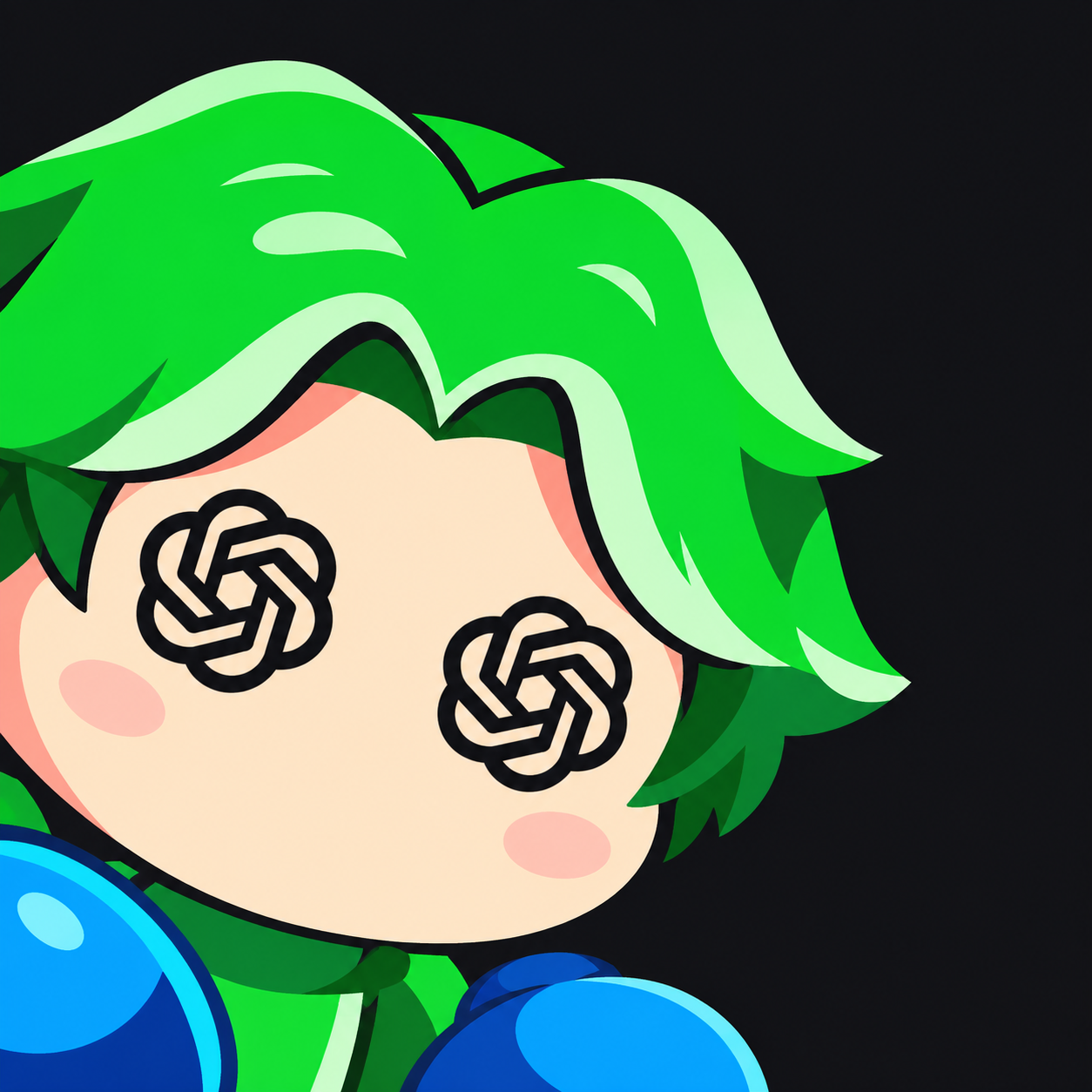
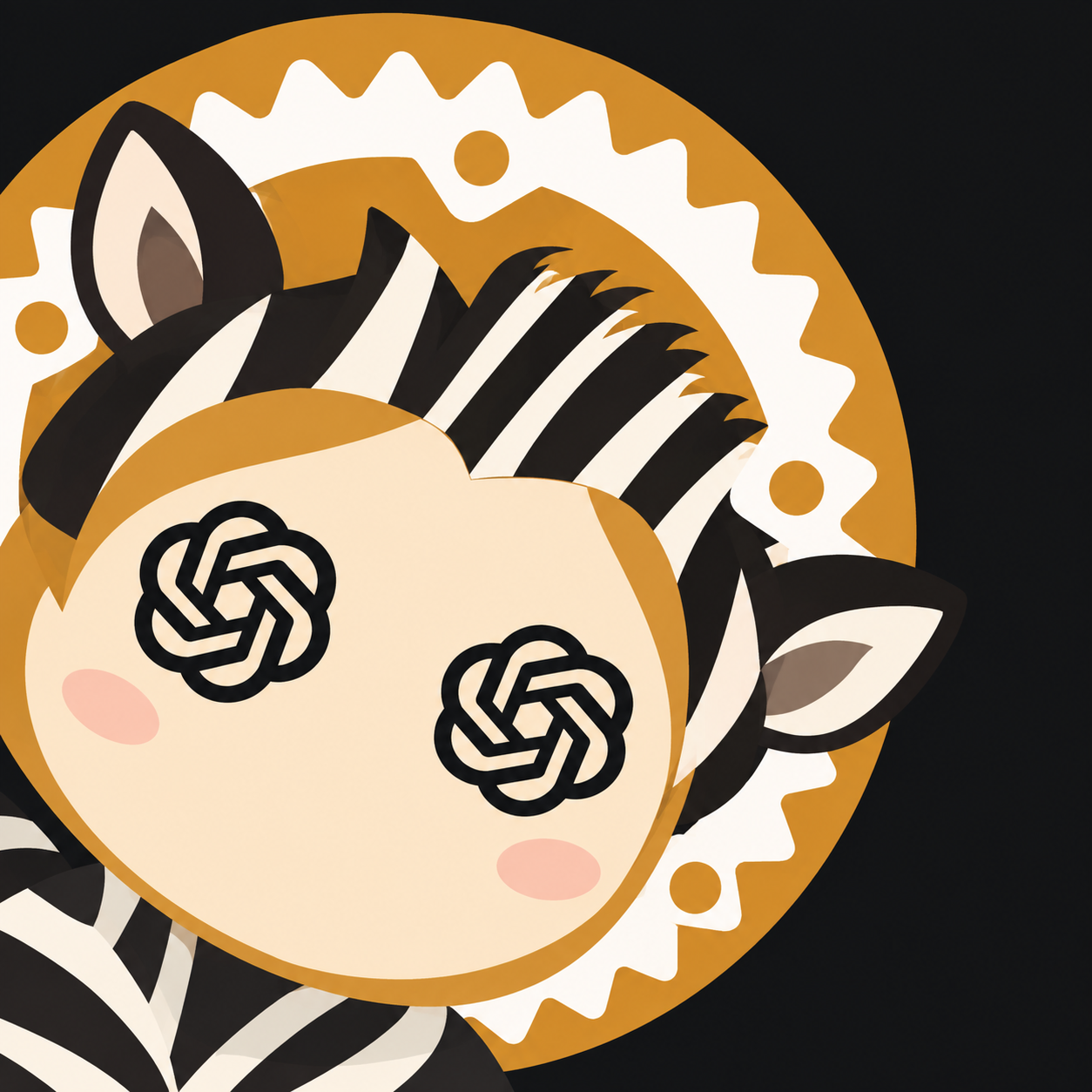
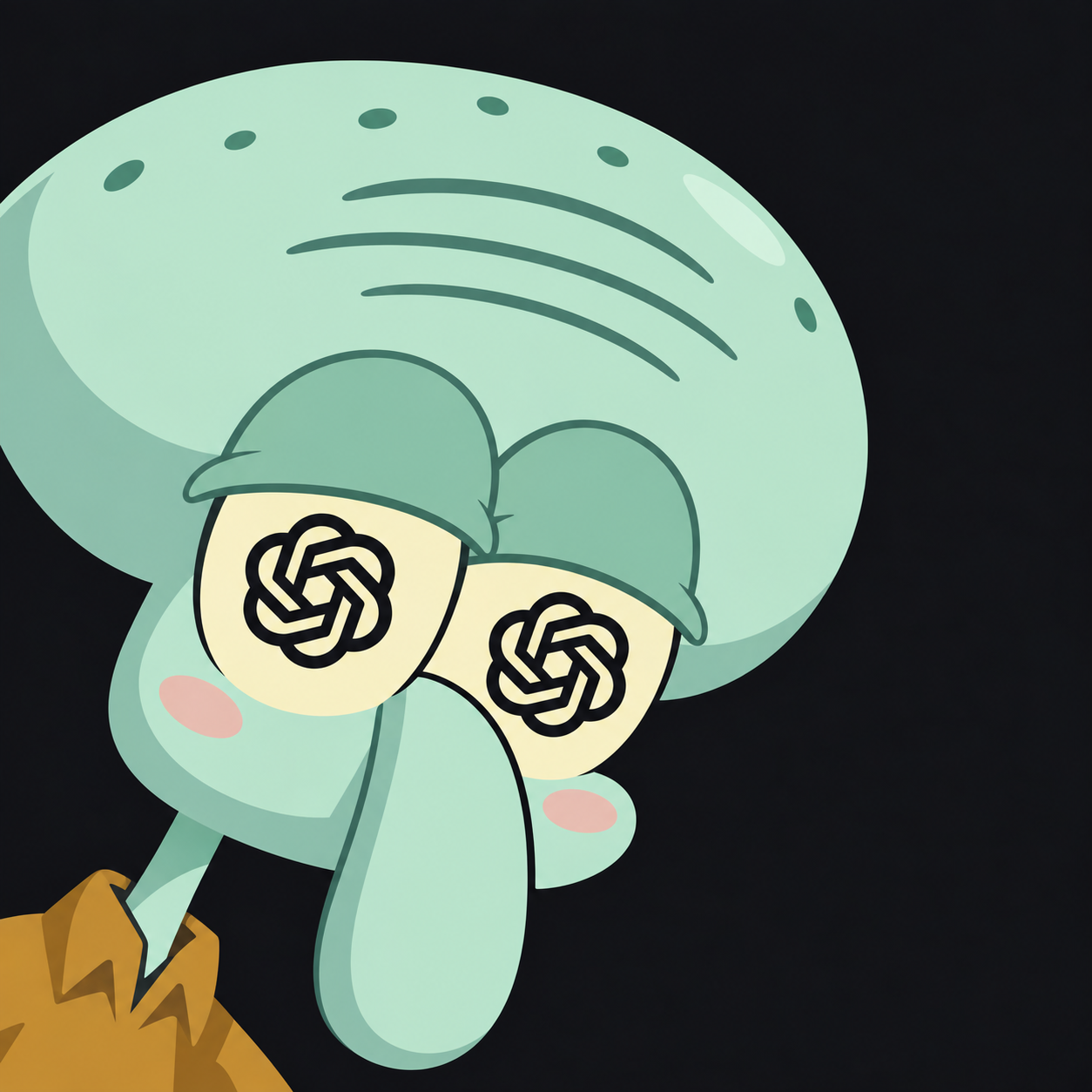
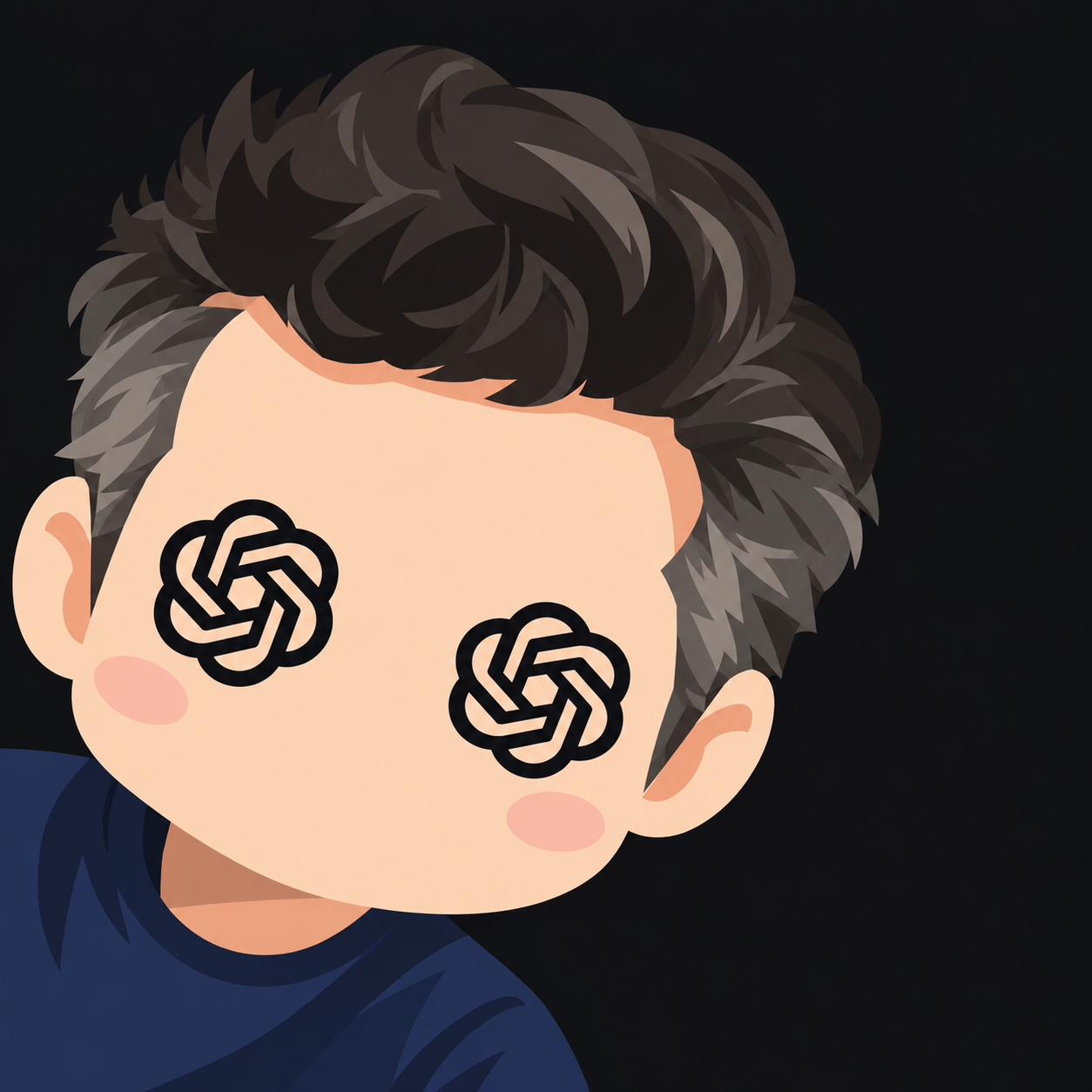
Copy the prompt, paste it into ChatGPT with your photo, and get a ChatGPT icon with ChatGPT eyes.
View Prompt
[GOAL]

Reinterpret the person or character in the user-provided image as a single minimalist 2D bot icon with two OpenAI knot-logo-shaped eyes.

Take the visual features needed to recognize the subject from the source image while following the specifications below for the facial structure, eyes, expression, composition, and coloring. In these instructions, “bot icon” refers to this visual specification.

[INFORMATION TO TAKE FROM THE SOURCE IMAGE]

Identify the subject’s skin tone or base facial surface color, hair color, and hair silhouette. Base the hair length, parting, curl pattern, distinctive bangs, and tied sections on the source image.

Select any distinctive ears, hats, glasses, facial hair, accessories, or mechanical components needed to recognize the subject. Preserve their main colors and retain approximately three primary identifying features, plus one or two subtle secondary details when useful. Prioritize large silhouettes, but do not erase smaller features that noticeably contribute to the subject’s hairstyle or identity.

Do not standardize the skin or hair to any predetermined color. If the subject has no hair or the hair is concealed, preserve that condition. Do not add bangs, accessories, or mechanical components that are absent from the source.

Do not copy the source subject’s original expression or realistic facial structure. Simplify complex clothing and equipment, retaining only the parts needed for identification.

If a separate style reference image is provided, take the character’s appearance only from the transformation subject. Do not transfer the style reference’s skin color, hair color, hairstyle, accessories, or identifying features.

[FACE]

Combine a large, round bot face with simplified hair and the subject’s identifying features. Express cuteness through rounded proportions and the tilted composition rather than through decorative facial expressions.

Base the face on the subject’s original skin tone or surface color and render it as a broad, smooth color area. Connect the cheeks and chin softly. Avoid a pointed or angular chin and realistic bone structure.

Do not draw a mouth or nose. Do not add a smiling mouth, a small dot-shaped mouth, or a cat-shaped mouth.

Add a small, pale oval blush shape to each cheek using a low-saturation color that suits the face. Render the blush as a flat color area without outlines or highlights.

Leave ample empty facial space around the eyes and blush. If glasses or facial hair are essential identifying features, preserve them in a minimal form. Glasses must not obscure the eyes, and facial hair must not depict a mouth or realistic facial anatomy.

[EYES]

Draw exactly two near-black, solid OpenAI knot-logo-shaped eyes.

Each eye must use the recognizable OpenAI knot emblem as its complete eye shape: a compact, interwoven six-part knot/rosette composed of six rounded, interlocking loops arranged with rotational symmetry around a small central negative-space opening. The eye symbols should clearly read as simplified OpenAI logo marks rather than ordinary pupils, circles, flowers, stars, spirals, or generic geometric icons.

The two OpenAI logo eyes must have the same size, line thickness, proportions, and internal construction. Place one logo eye on the viewer’s left and one on the viewer’s right, positioned like a normal pair of eyes while remaining clearly separated from each other.

Render each OpenAI logo eye as a simple, thick graphic symbol. Preserve the characteristic interlocking knot structure and central negative space while simplifying very small details where necessary for readability at icon size.

The OpenAI logo shapes themselves are the eyes. Do not place separate eyeballs, pupils, irises, sclera, or other eye shapes inside or behind them.

Both logo eyes must use one uniform near-black color. Do not add reflections, highlights, sparkles, gradients, eyelashes, eyelids, eyebrows, glowing effects, decorative outlines, or additional colors to the eyes.

Both eyes must follow the same head tilt specified under [COMPOSITION]. Rotate the two OpenAI logo eyes together with the face so that their orientation remains consistent relative to the tilted head.

Both OpenAI logo eyes must remain completely visible. Hair, glasses, accessories, hats, facial hair, and mechanical components must not cover, intersect, distort, or obscure any portion of either logo eye.

The two OpenAI logo eyes should remain immediately recognizable even when the finished image is reduced to a small profile-icon size.

Do not replace the OpenAI logo eyes with brackets, capsules, vertical bars, parentheses, crescents, ordinary circles, conventional cartoon eyes, or any other eye shape.

This specification takes priority over the source subject’s original eye shape and eye color.

[COMPOSITION]

Use a 1:1 square canvas and include one character. Enlarge the face, hair, or outer head silhouette so that it fills most of the frame.

The character should appear to lean into the frame from the lower-left corner. Tilt the head approximately 15–20 degrees clockwise so that the eye on the viewer’s left appears slightly higher than the eye on the viewer’s right. The face, both OpenAI logo eyes, hair, and attached accessories must follow the same tilt.

The two OpenAI logo eyes must maintain their normal left-right placement and consistent orientation relative to the face throughout the tilt.

Crop the left and lower edges of the head naturally against the canvas boundaries. The chin should touch the lower edge or extend partially beyond the frame. Leave an area of empty dark background in the upper-right.

Both eyes must remain completely visible and must not be covered by hair or accessories. Avoid a centered passport-photo composition, a small full-head composition, or a symmetrical layout.

Do not draw the torso or hands. If necessary for identification, show only a small portion of the neck or collar at the bottom. The enlarged face and edge cropping are intentional parts of the composition.

[HAIR, ACCESSORIES, AND COLORING]

Build the hair from a few large, smooth shapes while preserving the direction of the bangs, approximate length, parting, volume, and overall silhouette from the source.

Add a restrained amount of secondary hair detail—approximately 10% more detail than a completely flat silhouette. Include a few broad, grouped locks or strand divisions around the bangs, parting, temples, or outer edge where they help communicate the original hairstyle. These details should remain clean and graphic; do not draw every individual strand.

Use a minimalist 2D style based mainly on flat color shapes with little or no visible outline. Separate forms through differences between adjacent colors rather than thick black outlines.

Use the subject’s representative original colors with flat, soft coloring. In addition to the base color, allow one broad area of subtle shadow and one or two restrained highlight shapes that follow the flow of the hair. The highlights should add a gentle sense of shine and volume without making the hair glossy, highly rendered, or three-dimensional.

Preserve up to three primary identifying features and one or two smaller secondary details when they meaningfully improve recognition. Do not remove every internal detail from distinctive hair, accessories, clothing, or mechanical parts.

Simplify accessories and mechanical components to their main silhouettes and major connections, while allowing one or two characteristic internal shapes when needed for recognition. Omit tiny screws, dense wiring, circuits, crowded panel lines, and intricate patterns.

Even when reduced to a small profile icon, the two near-black OpenAI knot-logo eyes and the subject’s defining silhouette must remain immediately readable.

[BACKGROUND AND EXCLUDED ELEMENTS]

Fill the entire canvas with a single, nearly black, dark-charcoal background color. Do not add background objects or patterns.

Exclude circular frames, badge borders, text, numbers, additional logos, watermarks, speech bubbles, exclamation marks, glitter, particles, light blooms, and lens flares. The only logo symbols permitted are the two OpenAI knot-logo shapes used specifically as the character’s eyes.

Avoid photorealism, 3D rendering, oil-paint texture, rough sketch lines, excessive gloss, complex shading, numerous individually rendered hair strands, and overcrowded decoration. A few clean, grouped hair strands and restrained highlight shapes are allowed.

[CONFLICT RESOLUTION]

If any instructions conflict, follow this order of priority:

1. Two undecorated near-black OpenAI knot-logo-shaped eyes, identical in size, clearly recognizable, and completely visible.
2. A round bot face without a mouth or nose.
3. A tilted extreme close-up composition in which both OpenAI logo eyes remain completely visible.
4. The source subject’s primary colors, essential identifying features, and restrained secondary hair detail.
5. All other details.

If the bangs cover the eyes, preserve their characteristic direction while adjusting their length, width, or position. If cropping would completely remove an essential accessory, slightly adjust its size or position so that a recognizable portion remains visible. Do not invent features absent from the source while making these adjustments.

[EXECUTION AND FOLLOW-UP EDITS]

When the user requests generation or transformation, respond with one actually generated, finished icon without explanatory text or captions.

If the user attaches one transformation image without asking a separate question, treat it as a standard transformation request.

If the transformation image cannot be viewed, ask the user to attach it. If the image contains multiple people and the intended subject is not specified, ask which person should be transformed.

If the user asks only for prompt editing, rule explanations, result analysis, or usage instructions, respond in text and do not generate a new image. Provide the written production specification only when requested, and never place it inside the image.

For follow-up edits, change only the requested elements. Preserve all unmentioned style rules and character features.

Do not claim that a result was generated or verified unless it was actually generated or inspected.